
Core Business Definition
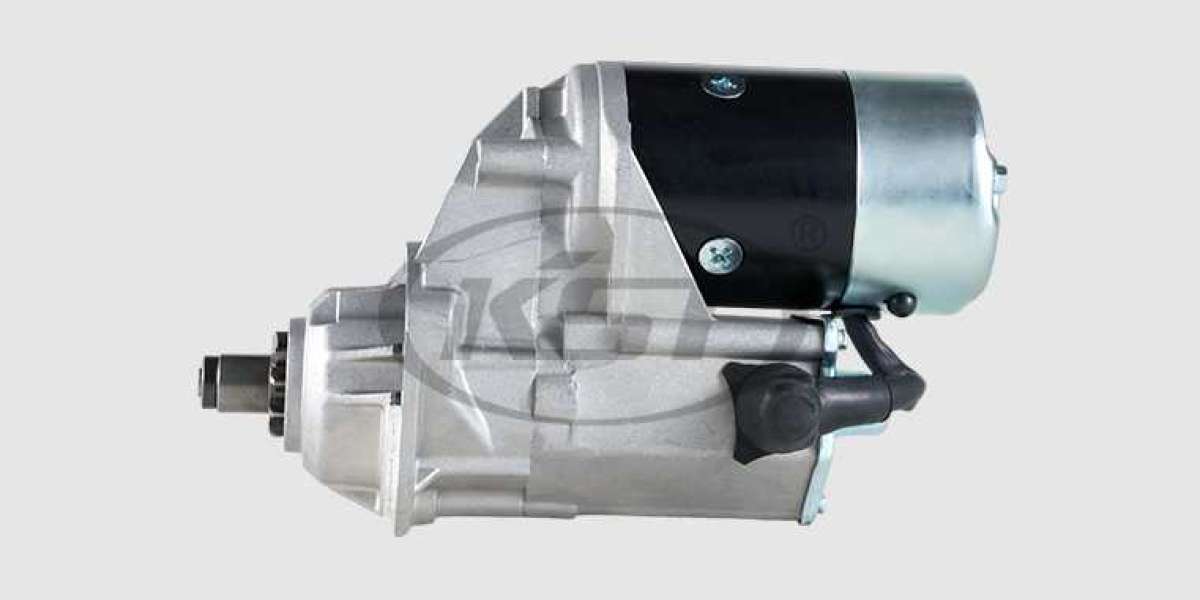
An OEM starter manufacturer is a specialized industrial company that designs and produces starter motors for vehicle manufacturers to install as original equipment in new cars, trucks, and construction machinery. These manufacturers supply directly to automotive brands through rigorous engineering collaboration, quality standards, and supply chain integration that ensures every new vehicle leaves the factory with a starter designed specifically for its engine requirements. The relationship involves joint development, validation testing, and just-in-time delivery systems that maintain production efficiency for vehicle assembly plants.
Product Range and Applications
OEM starter manufacturers produce diverse starter types for various vehicle segments. Conventional starters serve traditional internal combustion engines across passenger cars and light commercial applications with standardized performance characteristics. Start-stop system starters are engineered for micro and mild hybrid vehicles, enabling automatic engine shutdown during idle periods with rapid restart capability and enhanced durability for significantly increased start cycles. Heavy-duty starters for commercial vehicles, construction machinery, and marine applications feature robust construction with torque outputs reaching twenty newton meters or more for diesel engines with high compression ratios requiring greater starting power. Twenty-four volt systems serve heavy truck and industrial applications where higher voltage provides improved cold-starting performance.
Engineering and Design Capabilities
OEM starter manufacturers invest substantially in research and development to meet evolving vehicle requirements. Engineering teams develop start-stop technologies for next-generation micro and mild hybrid vehicles, contributing to fuel efficiency and emissions reduction. Continuous innovation includes development of planetary gear reduction systems that multiply torque output while maintaining compact package sizes. Research programs explore starter integration with hybrid systems and high-voltage architectures for future vehicle platforms. Technical research and development teams hold numerous patents for starter motor innovations, advancing motor efficiency, durability, and noise reduction characteristics.
OEM Partnership Requirements
Becoming an OEM starter manufacturer requires meeting stringent automotive industry standards. Manufacturers must maintain IATF 16949 certification specifically for automotive production parts, along with ISO 9001 quality management systems that validate manufacturing processes. Specific OEM quality certifications demonstrate capability to meet individual manufacturer requirements, with suppliers undergoing regular audits and performance evaluations. Long-term technology partnerships are common, with manufacturers obtaining technology licenses and entering cooperative development agreements that span decades of collaboration.
Manufacturing Processes and Quality Control
Production within an OEM starter manufacturer involves advanced manufacturing technologies and rigorous quality systems. Cast iron housings with reinforced ribs provide enhanced durability and vibration resistance for demanding applications, with some manufacturers utilizing thicker housings exceeding industry standards. Planetary gear reduction systems multiply torque output by significant margins compared to standard designs while reducing wear through improved load distribution. Wet lubrication design extends service life in high-heat environments by maintaining consistent lubrication throughout operating temperature ranges. Comprehensive testing throughout production validates performance characteristics, with advanced models achieving high IP ratings for protection against dust and water ingress in demanding applications.
Quality Certifications and Standards
Rigorous certifications distinguish professional OEM starter manufacturers. IATF 16949 certification addresses automotive industry specific requirements for production parts, representing the highest quality standard for automotive suppliers. ISO 9001 quality management validates manufacturing processes and continuous improvement systems. ISO 14001 environmental certification demonstrates commitment to sustainable manufacturing practices and regulatory compliance. OSHAS 18001 or ISO 45001 confirms occupational health and safety management protecting workers. International product certifications including CE, RoHS, and regional requirements ensure compliance with global market access standards.