2026-01-15 Written by DengyueMed
As oncology care continues to evolve toward precision medicine, therapies targeting key oncogenic signaling pathways have become central to cancer management. Among them, mTOR inhibitors play a critical role by selectively interrupting tumor cell growth, metabolism, and angiogenesis.
Qingweishi® Everolimus Tablets represent a high-quality, globally accessible mTOR inhibitor developed in China. As the first domestically approved generic everolimus and the only locally manufactured formulation currently available, Qingweishi® is redefining access to targeted therapy while meeting rigorous international quality standards. Through reliable efficacy, consistent quality, and improved affordability, Qingweishi® is helping more patients worldwide benefit from established mTOR-targeted treatment.
Product Overview
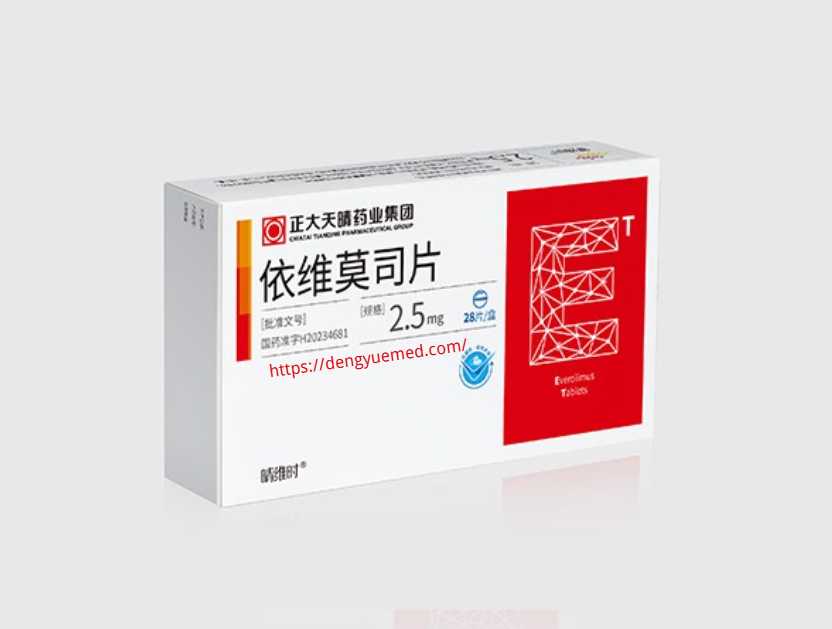
Qingweishi® Everolimus Tablets are an oral, small-molecule targeted therapy developed by Chia Tai Tianqing Pharmaceutical Group. The active ingredient, everolimus, is a well-characterized mTOR inhibitor with extensive global clinical experience.
Generic name: Everolimus Tablets
Active ingredient: Everolimus
Molecular formula: C₅₃H₈₃NO₁₄
Dosage form: Oral tablets
Appearance: White to off-white tablets
Common strength: 2.5 mg
Qingweishi® has successfully passed quality consistency evaluation, demonstrating equivalence in quality and clinical performance to the originator product. Its development and manufacturing processes comply with internationally recognized pharmaceutical standards, ensuring reliability, safety, and reproducibility.
Mechanism of Action
Qingweishi® exerts its therapeutic effects through selective inhibition of the mammalian target of rapamycin (mTOR) pathway, specifically the mTORC1 complex—one of the central regulators of cell growth, proliferation, metabolism, and angiogenesis.
After entering the cell, everolimus binds to the intracellular protein FKBP-12, forming a complex that directly inhibits mTORC1 activity. This targeted inhibition leads to multiple downstream antitumor effects, including:
Suppression of tumor cell proliferation through G1-phase cell cycle arrest
Inhibition of tumor angiogenesis by reducing VEGF expression
Modulation of cellular metabolism and energy utilization
Restoration of sensitivity to endocrine therapy in hormone-driven cancers
Importantly, everolimus demonstrates high selectivity for mTORC1 with limited impact on mTORC2, supporting a favorable balance between efficacy and tolerability.
Broad Clinical Applications
Supported by extensive clinical evidence, Qingweishi® Everolimus Tablets are approved across multiple oncologic and rare disease indications, reflecting the broad therapeutic value of mTOR inhibition.
Key approved uses include:
Advanced renal cell carcinoma following failure of prior VEGF-targeted therapy
Progressive, well-differentiated pancreatic neuroendocrine tumors
Progressive, non-functional gastrointestinal or lung neuroendocrine tumors
Tuberous sclerosis complex (TSC)–associated subependymal giant cell astrocytoma (SEGA) in patients not suitable for surgery
TSC-associated renal angiomyolipoma not requiring immediate surgical intervention
Hormone receptor-positive, HER2-negative advanced breast cancer, in combination with exemestane, after progression on non-steroidal aromatase inhibitors
Across these indications, everolimus has consistently demonstrated meaningful improvements in progression-free survival, disease control, and clinical outcomes, making it a cornerstone therapy in mTOR-driven disease management.
Administration and Safety
Qingweishi® is administered orally once daily and should be prescribed by healthcare professionals experienced in targeted and oncology therapies. Dosing recommendations vary by indication and patient characteristics.
The safety profile of everolimus is well established. Common adverse reactions include stomatitis, infections, fatigue, diarrhea, and rash, most of which are mild to moderate and manageable with standard supportive care and dose adjustments. Long-term treatment has shown acceptable tolerability across diverse patient populations.
Improving Global Access to Targeted Therapy
Access to essential targeted therapies remains a challenge in many regions worldwide. Qingweishi® addresses this gap by offering a high-quality, cost-effective alternative to the originator everolimus, without compromising efficacy or safety.
By improving availability and affordability, Qingweishi® supports more consistent long-term treatment—particularly important for chronic oncologic and rare disease indications. Its introduction has expanded treatment opportunities not only in China but also across emerging markets, contributing to a more equitable global oncology care landscape.
Through established international distribution channels, Qingweishi® is reaching healthcare systems and patients beyond national borders, reinforcing China’s growing role in supplying reliable, globally relevant pharmaceutical solutions.
Advancing Innovation Through Trusted Generics
The successful development of Qingweishi® highlights the evolving role of high-quality generics in modern medicine. By combining robust scientific validation, international manufacturing standards, and strategic intellectual property expertise, Qingweishi® exemplifies how trusted generics can accelerate access while supporting continued innovation.
Moreover, the widespread availability of everolimus is enabling further research into combination regimens, including emerging oral endocrine and targeted therapies. These advances continue to expand the therapeutic potential of mTOR inhibition in oncology.
Looking Ahead
Qingweishi® Everolimus Tablets embody a commitment to quality, accessibility, and global patient benefit. By delivering proven mTOR-targeted therapy to a broader population, Qingweishi® is helping shape a future where effective cancer treatment is not limited by geography or affordability.
As Chia Tai Tianqing continues to advance its international footprint, Qingweishi® stands as a key example of how high-standard pharmaceutical development can contribute meaningfully to global health.