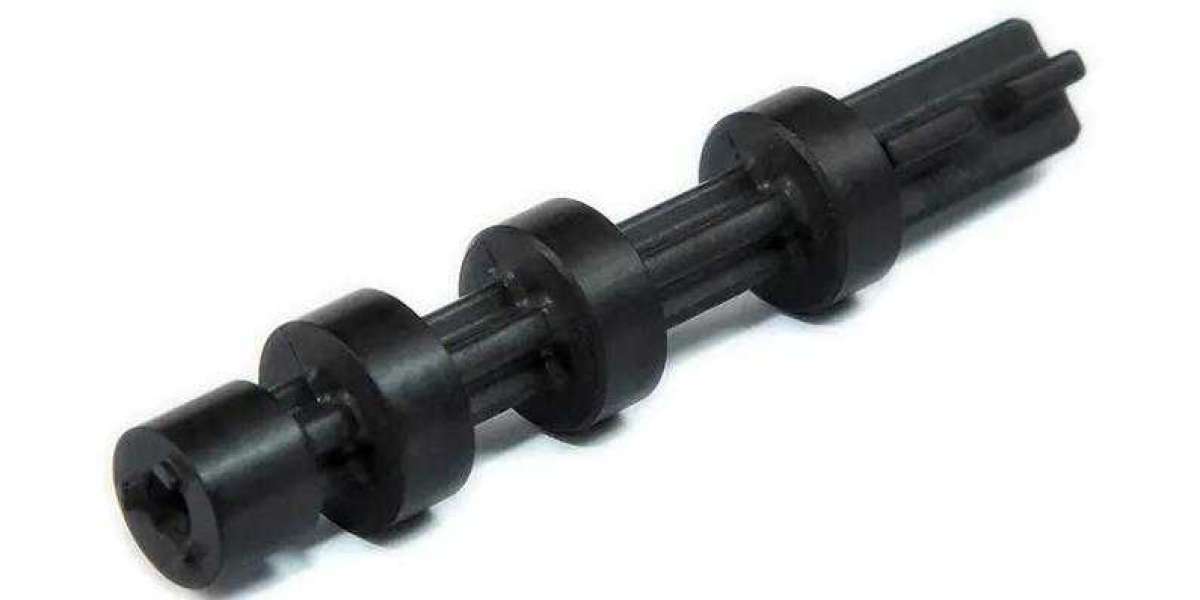

Reimagining the Rotating Heart of Lubrication
The oil pump-carbon fiber plastic-drive shaft represents a paradigm shift in the design of a fundamental engine component, moving from a traditional machined steel part to an advanced engineered composite. This shaft is the critical link that transmits rotational drive—typically from the crankshaft or camshaft—to the pump's internal gerotor or gear set, thereby pressurizing the engine's lubrication system. Re-engineering it from carbon fiber-reinforced polymer (CFRP) targets a multifaceted performance gain: achieving dramatic weight reduction to improve engine responsiveness and efficiency, leveraging the material's high damping properties to reduce noise and vibration, and utilizing net-shape manufacturing to integrate complex features. This innovation speaks to the pursuit of holistic efficiency in next-generation powertrains.
The Composite Advantage: Beyond Weight Savings
While weight reduction is a primary driver, the benefits of CFRP are more profound. The high specific strength and stiffness of the material allow the shaft to handle significant torsional and bending loads with a fraction of the mass of steel, reducing rotational inertia. This directly translates to improved engine throttle response and lower parasitic loss. Crucially, CFRP's inherent damping characteristics absorb high-frequency vibrations from the engine and pump, contributing to a quieter overall engine sound profile and reducing stress on adjacent components. Furthermore, advanced thermoset or thermoplastic matrices can be formulated for excellent chemical resistance to modern engine oils and dimensional stability across a wide temperature range (-40°C to 150°C+), ensuring reliable operation throughout the engine's lifecycle.
Engineering for Torque and Interface Integrity
The central design challenge is ensuring reliable torque transmission and longevity at the shaft's interfaces. The spline or keyway that mates with the driving component must be engineered to withstand shear forces without wear or deformation. This is often addressed by localized metallic reinforcement—integrating a metal sleeve or insert into the composite during molding, or using advanced 3D woven preforms that orient fibers optimally to handle torsional stress. Similarly, the journal surfaces that rotate within bushings or bearings may incorporate wear-resistant polymer sleeves or be treated with a specialized coating. The shaft's geometry is also optimized using Finite Element Analysis (FEA) to manage stress concentrations, prevent critical-speed resonances, and ensure the pump's internal gears remain in perfect alignment under all operating conditions.
Manufacturing Precision for a Dynamic Component
Manufacturing such a performance-critical part requires advanced composite processes. Resin Transfer Molding (RTM) or compression molding of pre-impregnated carbon fiber sheets (prepreg) is common for high-volume, net-shape production. These processes allow precise control over fiber layup and orientation to tailor strength and stiffness directionally. For the highest performance, filament winding of carbon fiber onto a mandrel may be used to create a hollow shaft with an exceptional torsional strength-to-weight ratio. The molding tooling itself is engineered to form the complex spline geometry and any integrated features in a single shot, eliminating secondary machining. Every shaft undergoes rigorous non-destructive testing (NDT) like ultrasound to check for voids or delamination, and is balanced to prevent vibration.