
Shipping goods from one place to another may look simple, but in reality, it involves many rules and calculations. One of the most important parts of freight shipping is understanding freight class. This is where a Freight Class Calculator becomes very helpful. A Freight Class Calculator helps shippers find the correct freight class for their goods. The correct freight class affects shipping cost, safety, and delivery speed.
If you are a business owner, warehouse manager, online seller, or logistics beginner, knowing how a Freight Class Calculator works can save you money and prevent mistakes. Many people overpay for shipping because they guess their freight class. Others face delays because they choose the wrong class. A simple Freight Class Calculator removes this confusion.
In this detailed guide, you will learn what a Freight Class Calculator is, how it works, why it is important, and how to use it correctly. Each section is written in very simple language so anyone can understand it easily. By the end of this article, you will feel confident using a Freight Class Calculator for your shipping needs.
What Is Freight Class Calculator
A Freight Class Calculator is an online or software tool that helps you determine the correct freight class of your shipment. Freight class is used in Less-Than-Truckload (LTL) shipping. It helps carriers decide how much to charge you.
Freight class is based on four main factors:
Density
Stowability
Handling
Liability
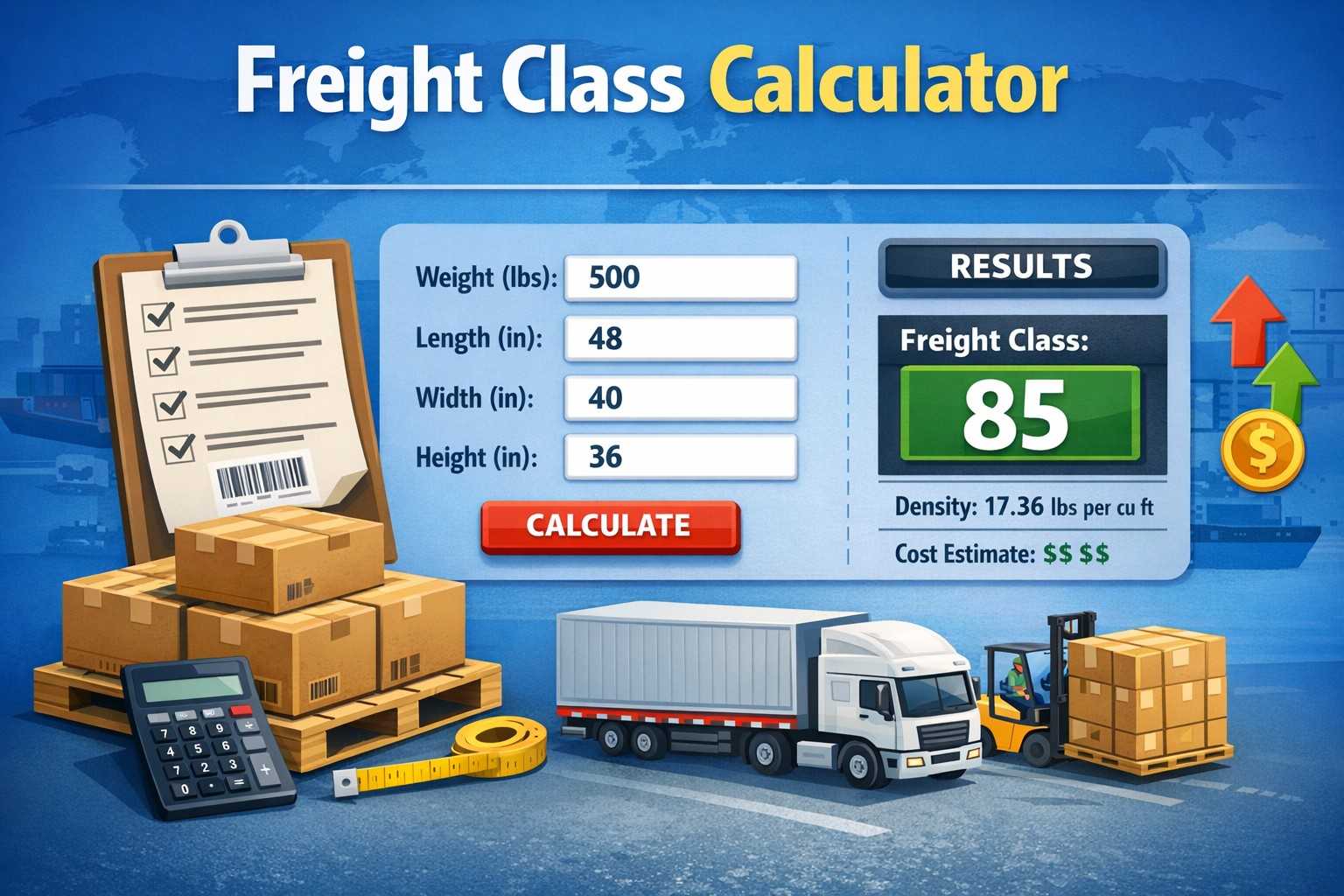
The most important factor is density. Density means how heavy your shipment is compared to its size. A Freight Class Calculator uses the length, width, height, and weight of your shipment to calculate density. Once density is calculated, the calculator matches it with the correct freight class number.
Freight classes usually range from 50 to 500. Lower classes (like 50 or 60) are cheaper because they are dense and easy to handle. Higher classes (like 300 or 400) cost more because they are light but take up more space.
For example, bricks are heavy and small in size. They have high density and a lower freight class. On the other hand, pillows are light but take up a lot of space. They have low density and a higher freight class.
A Freight Class Calculator makes this process quick and simple. Instead of guessing, you just enter shipment details and get accurate results in seconds. This reduces mistakes and avoids extra shipping charges.
Using a Freight Class Calculator is especially helpful for small businesses that ship regularly but do not have a logistics expert on staff. It saves time, money, and stress.
Why Freight Class Matters
Freight class plays a major role in determining shipping cost. If you choose the wrong class, you may pay more than needed or face additional charges later. That is why using a Freight Class Calculator is so important.
Carriers use freight class to organize shipments in their trucks. Goods that are heavy and compact are easier to stack. They take less space and are safer to transport. These items get lower freight classes and cheaper rates.
Lightweight items that are large in size take more truck space. Even though they are not heavy, they reduce how much other freight can fit in the truck. Because of this, they get higher freight classes and higher shipping rates.
Another reason freight class matters is billing accuracy. If you declare the wrong class and the carrier checks your shipment, they can reclassify it. This means you will receive a corrected invoice. In many cases, reclassification costs more.
Using a Freight Class Calculator reduces this risk. You provide exact measurements and weight. The calculator gives a correct estimate. This helps you avoid disputes with freight companies.
Freight class also affects insurance and liability. Some goods are fragile or valuable. These items may have higher freight classes because they require careful handling. If you enter wrong information, you may not get proper coverage in case of damage.
For businesses shipping daily or weekly, small pricing differences add up over time. A correct freight class ensures you stay competitive and control costs. That is why every shipper should understand and use a Freight Class Calculator before booking shipments.
How Freight Class Is Calculated
Understanding how freight class is calculated makes the Freight Class Calculator easier to use. The main calculation is based on density.
Here is the simple formula:
Density = Weight ÷ Cubic Feet
First, measure the length, width, and height of your shipment in inches. Then multiply them together. After that, divide by 1,728 to convert cubic inches to cubic feet.
Next, divide the total weight (in pounds) by the cubic feet. This gives you the density.
For example:
Length: 40 inches
Width: 48 inches
Height: 50 inches
Weight: 400 pounds
Multiply dimensions:
40 × 48 × 50 = 96,000 cubic inches
Convert to cubic feet:
96,000 ÷ 1,728 = 55.55 cubic feet
Now calculate density:
400 ÷ 55.55 = 7.2 pounds per cubic foot
Based on density charts, this density falls into a certain freight class range.
A Freight Class Calculator does all this math instantly. You only enter numbers, and it shows the freight class result.
Keep in mind that density is not the only factor. If goods are hard to stack, dangerous, or very fragile, carriers may adjust the class. However, in most cases, density decides the class.
That is why accurate measurement is very important. Even small mistakes in height or weight can change the freight class. Always measure carefully before using a Freight Class Calculator.
Benefits Of Using Freight Class Calculator
There are many benefits to using a Freight Class Calculator, especially for businesses that ship frequently.
First, it saves time. Manual calculations can be confusing. You may need charts and tables. A Freight Class Calculator completes everything in seconds.
Second, it reduces shipping errors. Wrong freight class leads to billing corrections and delays. A calculator lowers the chance of mistakes.
Third, it helps you compare shipping quotes. When you know your exact freight class, you can request accurate rate estimates from carriers. This allows you to choose the most affordable option.
Fourth, it improves budgeting. Businesses need predictable costs. A Freight Class Calculator gives a clear idea of shipping expenses before booking.
Fifth, it builds trust with carriers. When you provide correct freight information, carriers see you as reliable. This can improve long-term relationships.
Sixth, it helps small businesses compete with larger companies. Even without a logistics department, small companies can ship confidently using a Freight Class Calculator.
In short, the Freight Class Calculator is not just a tool. It is a smart business solution. It prevents overpayment, reduces disputes, and increases efficiency.
If you ship products regularly, using a Freight Class Calculator should become part of your standard process.
Common Mistakes In Freight Classification
Many shippers make mistakes when determining freight class. These mistakes can lead to extra charges and delivery problems. A Freight Class Calculator helps avoid these errors, but only if used correctly.
One common mistake is incorrect measurement. Some people round numbers or estimate dimensions. Even small differences can change density and freight class.
Another mistake is forgetting packaging size. Always measure the packaged shipment, not just the product. Pallets, crates, and wrapping increase dimensions.
Wrong weight entry is another issue. Guessing weight instead of using a scale often causes reclassification.
Some shippers also ignore special handling requirements. Fragile or hazardous items may need special classification.
Using outdated freight class charts is another problem. Freight classifications can change over time. A modern Freight Class Calculator stays updated.
Lastly, some businesses try to choose a lower freight class to reduce cost. This is risky. If discovered, carriers may charge penalties.
To avoid these mistakes:
Measure carefully
Weigh accurately
Include packaging
Use a reliable Freight Class Calculator
Correct classification protects your business from unexpected expenses.
Choosing The Right Freight Class Tool
Not all Freight Class Calculator tools are the same. Choosing the right one makes a big difference.
Look for a calculator that is easy to use. It should have simple fields for length, width, height, and weight.
The tool should provide instant results. A good Freight Class Calculator shows both density and class number.
Make sure it is updated according to current freight standards. An outdated tool may give incorrect results.
Some advanced calculators also offer shipping rate estimates. This is helpful for cost planning.
Mobile-friendly tools are also useful. Many warehouse managers use smartphones or tablets.
If you run an e-commerce or logistics website, you may even integrate a Freight Class Calculator into your platform. This allows customers to calculate shipping costs directly.
Free tools are available online, but always choose trusted sources. Accuracy matters more than design.
In the end, the best Freight Class Calculator is one that is simple, accurate, and reliable. When you find a good tool, use it consistently for every shipment.
Conclusion
A Freight Class Calculator is one of the most important tools in modern shipping. It helps determine the correct freight class quickly and accurately. Freight class affects shipping cost, billing, and delivery efficiency.
By understanding how freight class works and using a Freight Class Calculator properly, you can save money and avoid common shipping mistakes. Accurate measurement, correct weight entry, and reliable tools are key to success.
Whether you are a small business owner or a large company, using a Freight Class Calculator makes shipping easier and more professional. Start using it for every shipment and enjoy smoother freight operations.
Frequently Asked Questions
1. What is a Freight Class Calculator used for?
A Freight Class Calculator is used to determine the correct freight class based on shipment dimensions and weight. It helps calculate shipping cost accurately.
2. Why is freight class important?
Freight class affects shipping price, handling, and truck space usage. Incorrect classification can lead to extra charges.