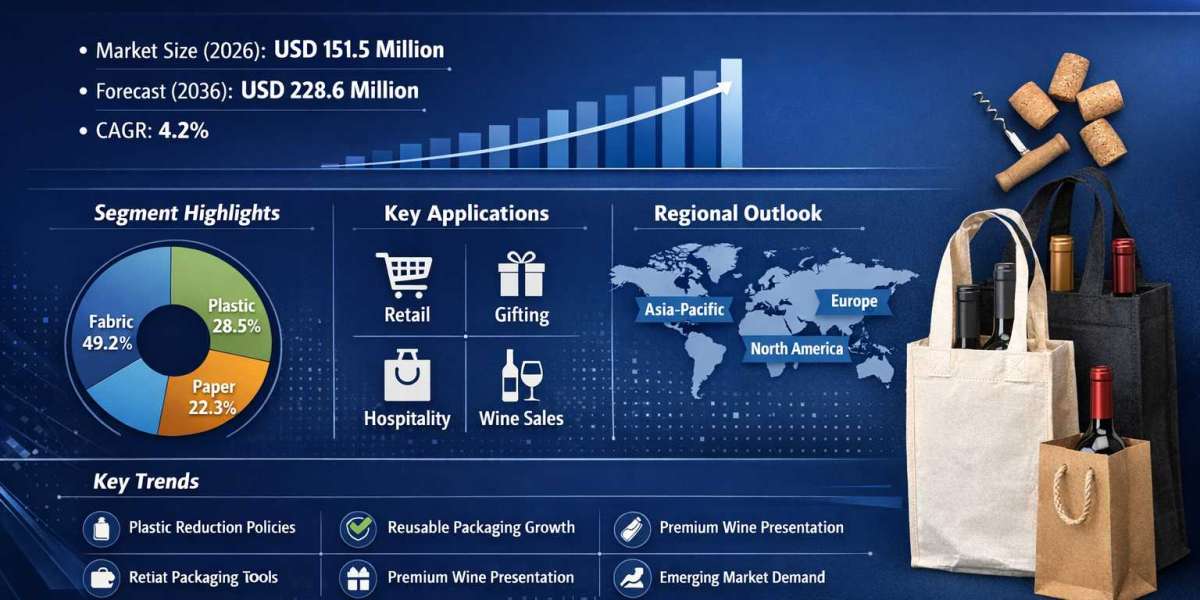

The global wine bag market is witnessing steady expansion as sustainability initiatives and retail packaging transformation reshape consumer purchasing behavior. The market was valued at USD 145.5 million in 2025 and is estimated to reach USD 151.5 million in 2026. According to market analysis, the industry is projected to reach USD 228.6 million by 2036, registering a compound annual growth rate (CAGR) of 4.2% during the forecast period.
Quick Stats: Wine Bag Market (2026–2036)
- Market Value (2026): USD 151.5 Million
• Forecast Value (2036): USD 228.6 Million
• CAGR: 4.2%
• Leading Segment: Fabric Wine Bags (49.2% Share)
• Key Product Segment: Reusable Wine Bags (63.0% Share)
• Fastest-Growing Countries: India, China, United States, Germany, France
• Key Growth Driver: Retail plastic reduction policies and sustainability programs promoting reusable packaging
Structural Growth Driver: Retail Sustainability Regulations and Plastic Reduction Mandates
Government policies aimed at reducing plastic waste are significantly influencing packaging decisions across global retail environments. Regulatory frameworks across North America and Europe are limiting the use of disposable plastic bags, pushing retailers to introduce sustainable alternatives such as reusable fabric or paper wine carriers. These regulations are reshaping procurement strategies for supermarkets, specialty wine stores, and hospitality establishments.
Key regulatory and industry frameworks influencing the market include:
- Plastic reduction and recycling regulations
• Retail sustainability certification programs
• Extended Producer Responsibility (EPR) policies
• Material sustainability and circular economy guidelines
• Packaging waste reduction standards
From Compliance to Industry Transformation
The wine bag market is gradually transitioning from regulatory compliance to strategic brand positioning. Companies are increasingly using reusable wine bags as marketing tools that enhance brand visibility while reinforcing sustainability commitments. Retailers are collaborating with packaging suppliers to develop customized fabric bags featuring logos, premium finishes, and reusable designs that encourage repeat consumer usage.
Companies are prioritizing several operational goals:
- Sustainability performance and eco-friendly materials
• Cost efficiency through reusable packaging models
• High recyclability and reduced environmental impact
• Compatibility with retail and hospitality supply chains
Technology Transformation: Sustainable Material Innovation
Technological innovation in packaging materials is playing an important role in shaping the wine bag market. Manufacturers are developing advanced textile blends, recycled fibers, and durable paper composites to improve strength, aesthetics, and sustainability. These innovations allow companies to create premium packaging solutions that maintain durability while meeting environmental compliance requirements.
Key innovation areas include:
- Advanced textile and fabric material development
• Automation integration in bag manufacturing
• Lightweight and durable design engineering
• Sustainable material and recycled fiber utilization
• Manufacturing efficiency improvements
Segment Highlights
By Material Type
- Fabric Bags (49.2% share): Dominant segment driven by sustainability positioning and strong consumer preference for reusable packaging.
Plastic Bags (28.5% share): Gradually declining due to regulatory restrictions and environmental concerns.
Paper Bags (22.3% share): Growing adoption as recyclable alternatives in retail wine departments.
By Product Type
- Reusable Wine Bags (63.0% share): Driven by retailer sustainability initiatives and consumer interest in durable packaging.
Disposable Wine Bags (37.0% share): Demand remains limited to low-cost retail packaging applications.
Single-Bottle Bags (61.0% share): Dominant format due to strong demand in wine gifting and luxury presentation.
Multi-Bottle Bags (39.0% share): Used mainly in hospitality and bulk retail purchases.
Regional Outlook: Emerging Economies Drive Adoption
Global growth in the wine bag market is shaped by sustainability regulations in developed regions and expanding wine consumption in emerging economies. While Europe and North America maintain strong regulatory influence, Asia-Pacific is becoming an important growth hub due to rising wine gifting culture and expanding hospitality industries.
Country-level growth projections include:
- India (5.2% CAGR): Growing hospitality sector and increasing urban wine consumption support demand for reusable packaging.
China (4.8% CAGR): Rising wine gifting culture drives premium packaging demand.
Brazil (4.1% CAGR): Expanding wine imports and retail wine sales contribute to steady growth.
Germany (3.9% CAGR): Packaging regulations and circular economy policies encourage sustainable bag formats.
United States (4.5% CAGR): State-level plastic bag bans accelerate adoption of reusable wine carriers.
Risk Landscape: Market Constraints and Challenges
Despite steady growth, the wine bag market faces several structural constraints related to supply chain dynamics and regulatory complexity. Input material cost fluctuations and evolving compliance requirements may affect profitability for smaller manufacturers.
Key challenges include:
- Raw material price volatility
• Supply chain disruptions in textile sourcing
• Infrastructure gaps in recycling and reuse systems
• Regulatory complexity across international markets
• High manufacturing costs for premium reusable bags
Competitive Landscape: Key Market Players
The wine bag market remains fragmented, with competition centered on suppliers capable of meeting large retail contracts while maintaining sustainability certification standards and customization capabilities.
Top companies operating in the market include:
- Yiwu Youbai Packing Co., Ltd
• Wine Box Company Limited
• Ampac Holdings, LLC
• Acorn Paper Products Company
• Richie Bags
Other notable companies include Initi Bag Manufacturer Co., Ltd, DM Packaging Company, Firstway (H.K.) Ltd, NANGFA Manufacturing Co., Ltd, and several regional packaging suppliers.
Outlook: Future of the Wine Bag Market
The future of the wine bag market will be shaped by sustainability-driven packaging innovation and the continued growth of premium wine retail and gifting segments. As plastic reduction regulations tighten worldwide, reusable packaging formats are expected to gain wider acceptance across retail, hospitality, and direct-to-consumer wine distribution channels.
Key growth drivers include:
- Advancements in sustainable packaging technologies
• Increasing adoption of reusable retail packaging
• Expansion of wine consumption in emerging markets
• Supply chain innovation and material sourcing improvements
For an in-depth analysis of evolving industry trends and to access the complete strategic outlook for the market through 2036, visit the official report page at: https://www.futuremarketinsights.com/reports/wine-bags-market