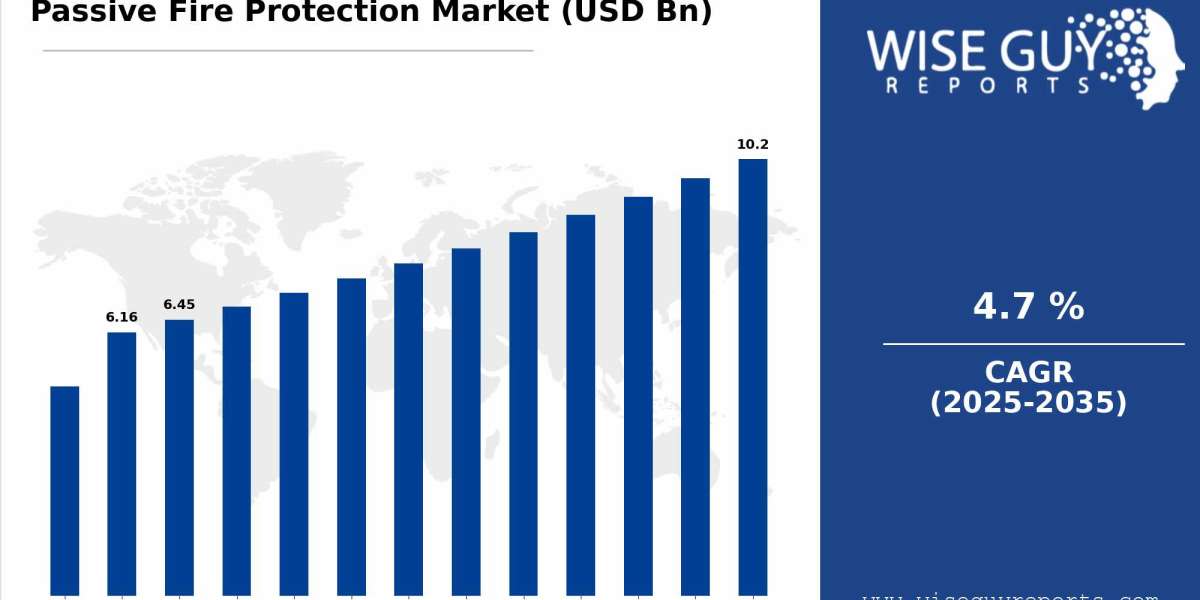

The Passive Fire Protection Market Size was valued at approximately 6.16 USD Billion in 2024. It is projected to grow from 6.45 USD Billion in 2025 to around 10.2 USD Billion by 2035, reflecting a compound annual growth rate of about 4.7% during the forecast period from 2025 to 2035.
Fire safety has become a fundamental priority in modern construction and infrastructure development. As cities grow denser and buildings reach greater heights, the importance of passive fire protection measures continues to increase. Passive fire protection focuses on containing fires within specific areas of a building, preventing them from spreading rapidly and causing catastrophic damage.
These systems are designed as an integral part of the building structure. Fire-resistant walls, floors, doors, and ceilings form barriers that limit the movement of flames and smoke. This containment strategy ensures that emergency responders have sufficient time to control fires while occupants evacuate safely. With building safety regulations becoming stricter across many countries, passive fire protection solutions are now mandatory in numerous construction projects.
Architects, engineers, and developers increasingly rely on detailed industry reports such as the passive fire protection market to understand emerging trends, new materials, and regulatory requirements shaping the sector. These insights help industry stakeholders design safer buildings while complying with evolving fire safety standards.
One of the major trends influencing the market is the adoption of advanced fire-resistant materials. Intumescent coatings, for instance, expand when exposed to high temperatures, creating a protective insulating layer around structural steel components. This helps maintain the structural stability of buildings during fires. Similarly, fire-resistant boards and sealants are used to protect electrical cables, ducts, and joints, preventing flames from spreading through hidden pathways.
Another important factor driving growth is the rising number of commercial and industrial facilities. Warehouses, manufacturing plants, and logistics hubs often store flammable materials, making fire protection a critical requirement. Passive fire protection systems provide long-term protection without requiring regular activation or complex maintenance procedures.
The growing focus on sustainable construction is also influencing product innovation in this market. Manufacturers are developing eco-friendly fire-resistant materials that meet both environmental and safety standards. These materials help reduce carbon footprints while maintaining high levels of fire resistance.
In addition, technological tools such as building information modeling (BIM) are transforming how passive fire protection systems are planned and installed. By using digital design platforms, engineers can simulate fire scenarios and optimize safety layouts before construction begins. This approach improves safety outcomes and reduces costly modifications during later stages of development.
Overall, the passive fire protection market is evolving alongside global construction trends. As buildings become more complex and safety regulations become more stringent, the demand for reliable passive fire protection solutions will continue to rise.
GLOBAL SUPPLY CHAIN MARKET DISRUPTION ALERT
Escalating geopolitical tensions in the Middle East, particularly around the Strait of Hormuz and the Red Sea, are creating significant disruptions across global energy, chemicals, and logistics markets. Critical shipping corridors are under pressure, with major oil, LNG, petrochemical, and raw material flows at risk, triggering supply chain delays, freight cost surges, insurance withdrawals, and heightened price volatility. These disruptions are increasing operational risks and cost uncertainties for industries dependent on global trade routes and energy-linked feedstocks.
Access our real-time disruption analysis covering supply chain risks, price outlook scenarios, logistics impacts, and alternative sourcing strategies.
? Request a Sample Report to understand the potential impact on your industry and get actionable insights to support procurement, risk management, and supply chain planning.
Contact us today to receive the latest market intelligence and mitigation strategies.
FAQs
1. How does passive fire protection differ from active fire protection?
Passive fire protection works by containing fires through structural barriers, while active fire protection relies on systems such as alarms, sprinklers, and extinguishers.
2. What materials are commonly used in passive fire protection?
Common materials include fire-resistant boards, intumescent coatings, fire-rated glass, sealants, and fireproof insulation.
3. Are passive fire protection systems required by law?
In many countries, building codes and safety regulations require passive fire protection systems in commercial, residential, and industrial structures.