
tool longevity.
Safety Features
Core Tool Definition
Power rotary hammers are heavy-duty drilling tools that combine rotational drilling with percussive striking action to break through hard materials like concrete, brick, and stone. Unlike standard drills that rely solely on rotation, these tools incorporate a piston mechanism that delivers rapid hammering blows while the bit spins, effectively chiseling through masonry with each impact. The result is fast, efficient drilling in materials that would quickly destroy ordinary drill bits or take excessive time to penetrate.
Operating Principles
The mechanism inside a power rotary hammer uses an electro-pneumatic system to generate impact force. An electric motor drives a piston that compresses air within a cylinder, which in turn drives a striker ram forward against the drill bit. This air cushion transfers energy without metal-to-metal contact, reducing wear while delivering consistent impact energy measured in joules. Users can typically select between three operating modes: rotation only for standard drilling, rotation with hammer for drilling into concrete, and hammer only for chiseling and light demolition work.
SDS Bit System
A defining feature of modern power rotary hammers is the SDS chuck system. SDS, meaning Special Direct System, uses bits with grooved shanks that lock securely into the chuck while allowing axial movement for the hammering action. The most common standard, SDS-Plus, accommodates bits from four to twenty-six millimeters in diameter with ten millimeter shanks featuring four grooves. This design enables quick tool-free bit changes and ensures efficient energy transfer from the hammer mechanism to the working surface.
Power and Performance Ratings
Several specifications determine power rotary hammer capabilities for different applications. Input power typically ranges from five hundred to fifteen hundred watts for corded models, while cordless versions use high-voltage battery platforms. Impact energy, measured in joules, indicates the force of each blow with heavier hammers delivering eight joules or more for demanding tasks. Impact frequency, expressed in beats per minute, affects drilling speed with higher rates producing faster penetration in combination with adequate impact energy.
Application Versatility
Power rotary hammers excel across numerous construction and renovation tasks. Drilling anchor holes in concrete for structural fasteners represents their most common application, with capacities up to thirty-two millimeters diameter or larger using core bits. Chiseling mode transforms the tool into a light demolition device for removing tile, chasing channels for conduit, or breaking up small concrete sections. Combination drilling through rebar embedded in concrete becomes possible when tools include overload protection clutches that engage additional power when encountering steel.
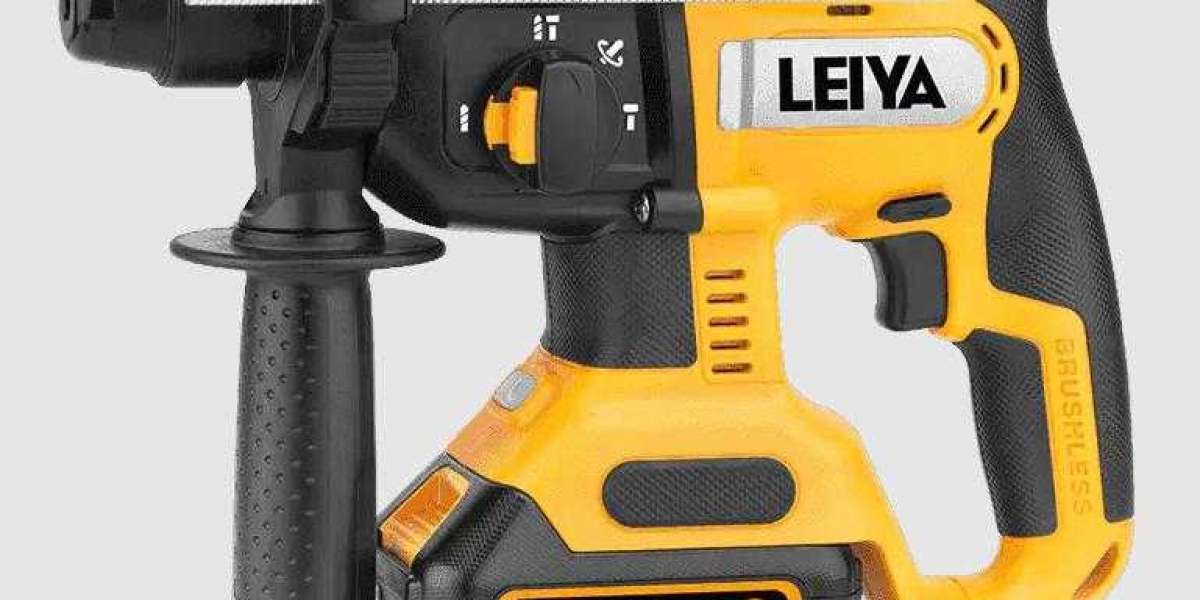
LEIYA Rotary Hammer Models
The LY-C3203 rotary hammer from Leiya exemplifies professional-grade power rotary hammer engineering. This fifteen hundred watt tool delivers up to four joules of impact energy at forty-three hundred beats per minute, providing ample power for demanding concrete drilling applications. Three operating modes including drilling, hammer drilling, and chiseling make it adaptable to various tasks from anchor installation to light demolition. The SDS-Plus chuck accepts standard bits up to thirty-two millimeters diameter, while the 5.1 kilogram weight balances power with manageable handling for overhead work.
Cordless Technology Advances
Modern cordless power rotary hammers have achieved performance levels rivaling corded tools through advanced battery and motor technology. High-output lithium-ion batteries with increased cell counts provide sustained power for drilling dozens of holes per charge. Brushless motors eliminate carbon brushes, extending tool life while delivering greater efficiency and runtime. Some models incorporate connectivity features that communicate with batteries to optimize power delivery based on load conditions, preventing overload shutdowns during demanding applications.
Dust Management Systems
Health considerations have driven development of integrated dust extraction for power rotary hammers. Vacuum attachments connect directly to tools, capturing dust at the source before it becomes airborne. This protects operators from silica exposure while reducing cleanup time on job sites. Some systems include automatic filters that maintain suction throughout drilling cycles. Cordless dust extractors paired with battery hammers create completely portable drilling systems for locations without power access.
Vibration Control Technology
Prolonged use of power rotary hammers exposes operators to vibration that can cause hand-arm vibration syndrome over time. Modern designs incorporate active vibration control through counterbalanced mechanisms that reduce transmitted vibration by up to fifty percent compared to older models. Ergonomic handles with rubber dampening further isolate users from impact forces. These features enable longer work periods with reduced fatigue and lower long-term health risks for professional users.
Accessories and Consumables
A wide range of accessories extends power rotary hammer capabilities beyond basic drilling. Carbide-tipped drill bits in various lengths and diameters address different hole requirements. Chisels including point, flat, spade, and channel types serve demolition and chasing applications. Core bits with center pilot drills cut larger diameter holes for conduit or pipe penetrations. Dust collection attachments integrate with vacuum systems for clean operation. Proper accessory selection ensures optimal performance and
Built-in safety mechanisms protect both operator and tool during power hammer operation. Slip clutches disengage drive torque if bits bind in rebar or voids, preventing sudden kickback that could cause injury. Overload protection monitors motor temperature and current draw, shutting down before damage occurs. Electronic speed stabilization maintains consistent performance under load. Double insulation protects users from electrical shock even if internal components fail.
Selection Considerations
Choosing the right power rotary hammer requires matching tool capabilities to expected work. Light-duty models under five kilograms suit occasional drilling for small anchors and through-holes. Medium-weight tools between five and eight kilograms handle daily professional use for general construction. Heavy-duty hammers exceeding eight kilograms with SDS-Max chucks tackle large diameter coring and serious demolition. Cordless options provide mobility while corded tools deliver unlimited runtime for continuous operation.
Maintenance Requirements
Proper care extends power rotary hammer service life significantly. Chuck cleaning prevents dust buildup that interferes with bit retention. Carbon brush inspection ensures continued motor performance in brushed models. Gear case lubrication at specified intervals protects transmission components. Air vent cleaning prevents overheating by maintaining cooling airflow. Storage in dry conditions prevents corrosion of internal parts. Following manufacturer maintenance schedules maximizes return on tool investment.