
Core Manufacturing Definition
A mass air flow sensor Toyota factory refers to the specialized production facilities where Toyota and its approved suppliers manufacture airflow measurement components for Toyota vehicles. These factories operate under Toyota's strict quality control standards, producing sensors that precisely match the calibration requirements of specific Toyota engine families. The manufacturing process combines advanced microelectronics, precision calibration, and rigorous testing to create components that maintain accuracy for hundreds of thousands of miles under varying driving conditions.
Primary Supplier Relationships
Toyota does not typically manufacture mass air flow sensors in-house but relies on specialized supplier partnerships. Denso Corporation, Toyota's primary electronics supplier and part of the Toyota Group, produces the majority of original equipment mass air flow sensors for Toyota vehicles. These sensors are manufactured in Denso facilities that operate as de facto mass air flow sensor Toyota factory extensions, following Toyota's exact specifications and quality requirements. Denso sensors are found in millions of Toyota vehicles worldwide, from the Corolla to the Camry, RAV4, Tacoma, and Tundra models.
Denso Manufacturing Facilities
Denso operates numerous manufacturing facilities globally that function as mass air flow sensor Toyota factory locations. Major production sites in Japan, including plants in Aichi Prefecture near Toyota's headquarters, produce sensors for Toyota's domestic and export vehicles. International facilities in Thailand, Indonesia, China, and North America supply regional manufacturing operations. These factories maintain ISO 9001 and IATF 16949 certifications, implementing Toyota Production System principles throughout sensor production lines to achieve six-sigma quality levels.
Sensor Technology and Design
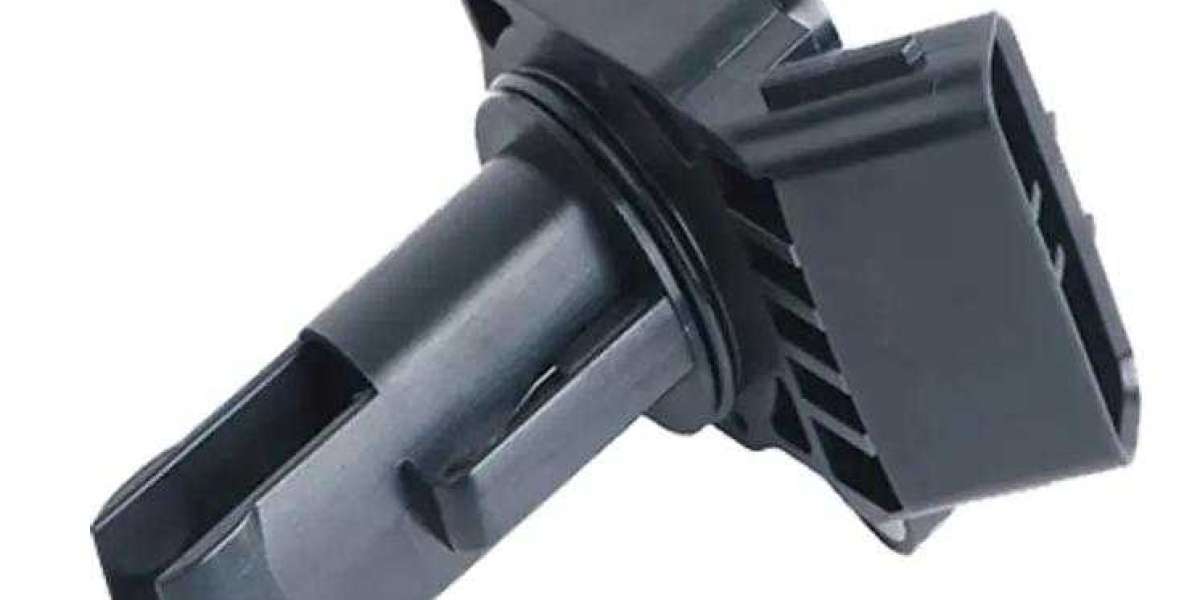
The mass air flow sensor Toyota factory produces sensors using hot film technology rather than older hot wire designs. A heating element deposited on a silicon substrate measures air mass by detecting cooling effects from incoming air. Integrated temperature sensors compensate for density variations, ensuring accurate fuel calculations regardless of ambient conditions. The sensing element mounts in a bypass channel that directs a representative air sample across the measuring surface while protecting it from large particles and turbulence.
Toyota-Specific Calibration
Each sensor from a mass air flow sensor Toyota factory undergoes calibration specific to particular engine applications. The relationship between airflow and output voltage must match the engine's displacement, volumetric efficiency, and intake system design. Calibration data is programmed into the sensor during manufacturing, with correction factors stored in internal memory. Toyota engineers develop these calibrations through extensive dyno testing, ensuring proper fuel delivery across the entire operating range from idle to wide-open throttle.
Quality Control Standards
Production within a mass air flow sensor Toyota factory follows exceptionally stringent quality protocols. Incoming materials including silicon wafers, platinum, and housing plastics undergo certification testing before release to production. Automated optical inspection examines each sensing element for microscopic defects. Functional testing verifies sensor response across the full flow range against traceable standards. Thermal cycling exposes sensors to extreme temperatures validating durability. Statistical process control tracks every manufacturing parameter, immediately flagging any deviation from specifications.
Clean Room Manufacturing
Sensor element production occurs in clean room environments within the mass air flow sensor Toyota factory. Class 1000 or better clean rooms prevent particle contamination that could affect accuracy or cause premature failure. Operators wear full gowning including coveralls, hoods, gloves, and face masks. Air showers remove particles before entry. HEPA filtration maintains positive pressure preventing outside contamination. These conditions ensure the microscopic sensing elements remain pristine throughout fabrication.