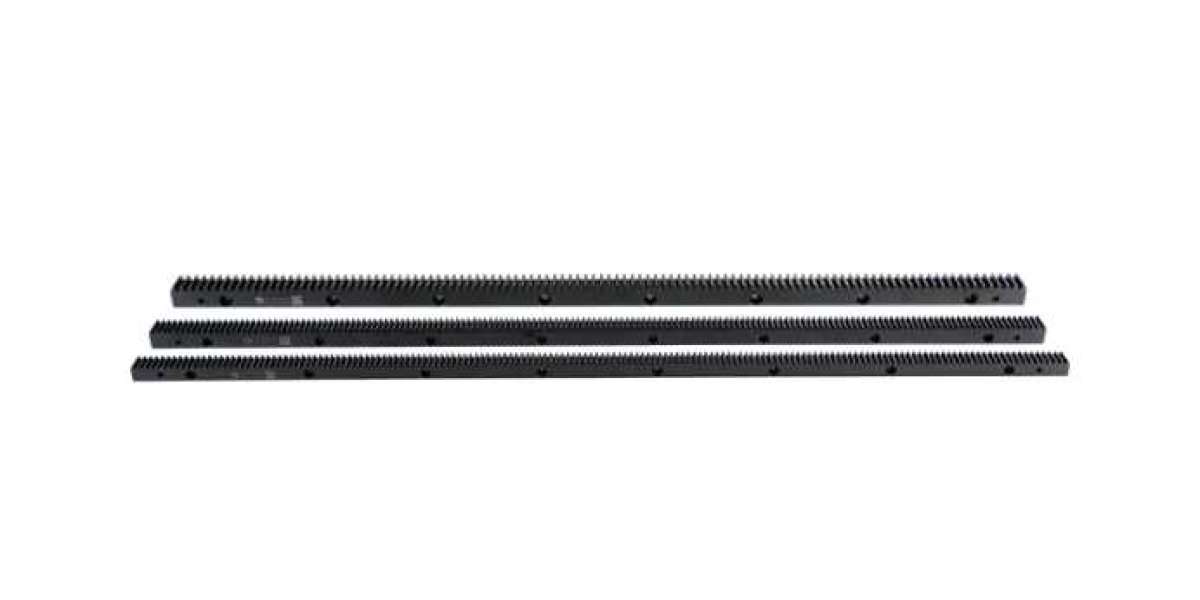

Core Business Definition
A racking gear factory is a specialized manufacturing facility that produces linear motion components consisting of toothed bars called racks, which mesh with pinion gears to convert rotary motion into precise linear movement. These factories design and manufacture racks in various configurations including straight tooth and helical tooth designs, with different precision grades, materials, and heat treatment specifications to suit diverse industrial applications. Production facilities range from manufacturers of standard catalog racks to those producing custom-engineered solutions for specific machinery requirements in automation, machine tools, robotics, and material handling systems.
Manufacturing Processes and Technology
Production within a racking gear factory involves multiple precision machining operations to achieve accurate tooth profiles and dimensional consistency. The manufacturing process typically begins with raw material preparation, followed by initial tooth cutting through hobbing or shaping operations. For high-precision racks, subsequent grinding operations refine tooth geometry and surface finish to meet tight tolerance requirements. Heat treatment including quenching, tempering, induction hardening, case-hardening, or nitriding enhances tooth surface hardness while maintaining core toughness. Quality control throughout production includes raw material certification, heat treatment verification, dimensional inspection, and non-destructive testing methods.
Tooth Profile Types and Configurations
Racking gear factories produce racks with different tooth geometries optimized for specific application requirements. Straight tooth racks feature teeth cut parallel to the rack axis, offering simplicity and ease of manufacturing for many applications where noise and vibration are not primary concerns. Helical tooth racks have teeth cut at an angle to the rack axis, providing smoother and quieter operation through progressive tooth engagement and improved load distribution across multiple teeth. Helix angles commonly include fifteen degrees and twenty degrees, each offering different performance characteristics. The selection of tooth profile depends on factors including load capacity requirements, speed, noise limitations, and precision needs.
Material Selection and Heat Treatment
Racking gear factories utilize various steel grades selected for their mechanical properties and response to heat treatment. Common materials include medium carbon steel for general applications and alloy steel for enhanced strength and durability where higher loads are expected. Material selection considers required hardness, wear resistance, toughness, and dimensional stability through the manufacturing process. Heat treatment may include through hardening for uniform properties, case hardening for wear-resistant surfaces with tough cores, or nitriding for enhanced surface hardness with minimal distortion. Surface hardness typically ranges according to application requirements, with harder surfaces providing greater wear resistance for demanding applications.
Precision Grades and Quality Standards
Racking gear factories manufacture racks to international precision standards that define allowable deviations in tooth spacing, profile form, and overall accuracy. Precision grades according to DIN standards range from high-precision grades for applications requiring minimal backlash and smooth motion to general industrial grades where extreme precision is not required. Higher precision grades correspond to tighter tolerances measured in microns, enabling applications requiring exact positioning and repeatability in machine tools and precision automation. JIS specifications offer corresponding grades with similar tolerance classifications.
Surface Finishing and Treatments
Racking gear factories apply various surface finishing operations to enhance performance and durability. Milled surfaces provide the initial tooth form, while ground surfaces achieve higher precision and better surface finish for demanding applications. Surface treatments including black oxide, phosphating, or other coatings provide corrosion protection during storage and operation. Side grinding ensures accurate mounting surfaces for proper alignment during installation. These finishing operations contribute to the overall quality and longevity of the finished product.