
Core Business Definition
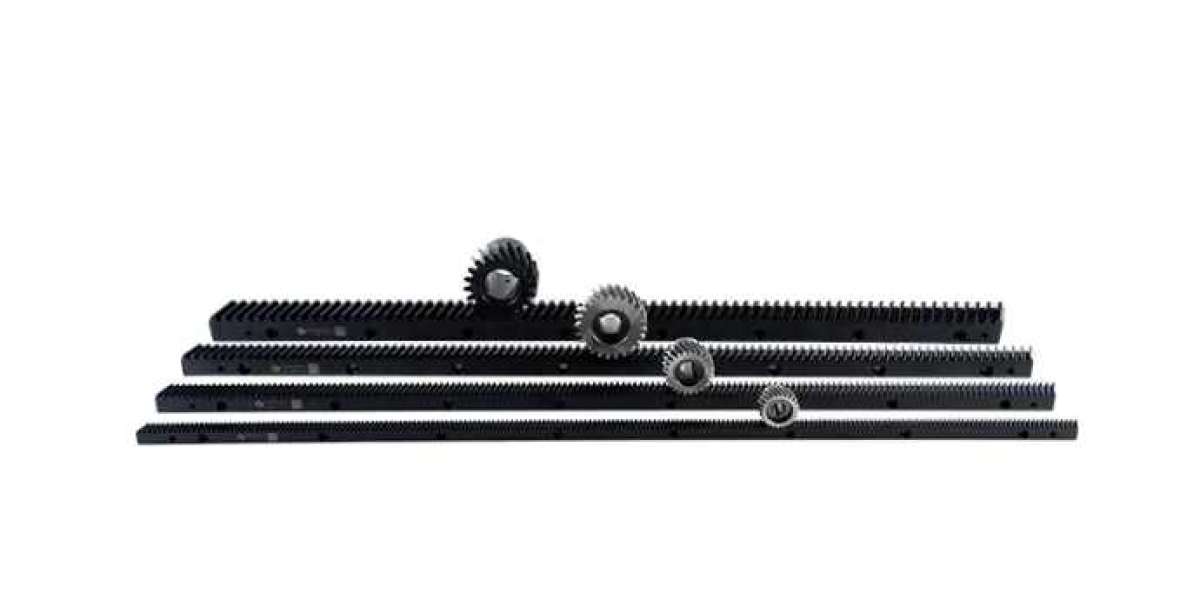
A helical rack manufacturer is a specialized industrial company that designs and produces linear motion components with teeth cut at an angle to the rack axis. This angled tooth configuration provides smoother and quieter operation compared to straight-toothed alternatives through progressive tooth engagement that distributes load over multiple teeth. These manufacturers produce racks that mesh with helical pinions to convert rotary motion into precise linear movement for demanding applications in machine tools, robotics, automation systems, and material handling equipment. The manufacturing process combines precision gear cutting technology, heat treatment expertise, and quality control systems to achieve the tight tolerances required for high-performance linear motion systems.
Manufacturing Processes and Technology
Production within a helical rack manufacturer involves multiple precision machining operations to achieve accurate tooth profiles and dimensional consistency. The manufacturing process typically begins with raw material preparation, followed by initial tooth cutting through hobbing or milling operations that create the characteristic angled tooth geometry. For high-precision racks, subsequent grinding operations refine tooth geometry and surface finish to meet tight tolerance requirements for applications demanding minimal backlash and exceptional smoothness. Heat treatment including induction hardening or case hardening enhances tooth surface hardness while maintaining core toughness, ensuring resistance to wear under continuous operation. Quality control throughout production includes raw material certification, heat treatment verification, and dimensional inspection using precision metrology equipment.
Tooth Geometry and Helix Angle
The helical teeth on these racks are characterized by specific helix angles that influence performance characteristics. Common helix angles are selected to optimize load distribution and smooth engagement for different application requirements. The helical arrangement provides greater tooth contact between the rack and pinion, distributing load over multiple teeth and leading to improved load-carrying capacity and higher torque transmission capabilities. This progressive tooth engagement results in significantly quieter operation compared to straight-toothed alternatives, making helical racks ideal for applications where noise reduction and smooth motion are important considerations.
Material Selection and Heat Treatment
Helical rack manufacturers utilize various steel grades selected for their mechanical properties and response to heat treatment. Common materials include medium carbon steel for general applications and alloy steel for enhanced strength and durability where higher loads are expected. Material selection considers required hardness, wear resistance, toughness, and dimensional stability through the manufacturing process. Heat treatment may include through hardening for uniform properties, induction hardening for wear-resistant surfaces with tough cores, or case hardening for enhanced surface durability. Surface hardness reaches appropriate levels for demanding industrial applications while maintaining the core toughness needed to absorb shock loads and prevent tooth breakage.
Precision Grades and Quality Standards
Helical rack manufacturers produce racks to international precision standards that define allowable deviations in tooth spacing, profile form, and overall accuracy. Precision grades range from ultra-high precision grades for applications requiring exact positioning and repeatability to general industrial grades for applications where extreme precision is not required. Higher precision grades correspond to tighter tolerances measured in microns, enabling applications such as CNC machine tools and precision measuring equipment where positioning accuracy directly affects product quality. Individual tooth spacing errors are controlled within micron-level tolerances, with cumulative pitch error maintained across the entire rack length.
Module Sizes and Configurations
Helical rack manufacturers offer comprehensive module ranges to accommodate diverse application requirements. Modules range from smaller sizes for lighter applications up to larger modules for heavy-duty industrial use. Standard rack lengths are available in various dimensions, with custom lengths available for specific requirements. Multiple rack sections can be joined end-to-end for longer travel distances while maintaining accuracy through precision alignment features. Both right-hand and left-hand helix orientations are manufactured to match mating pinion requirements for different drive configurations.