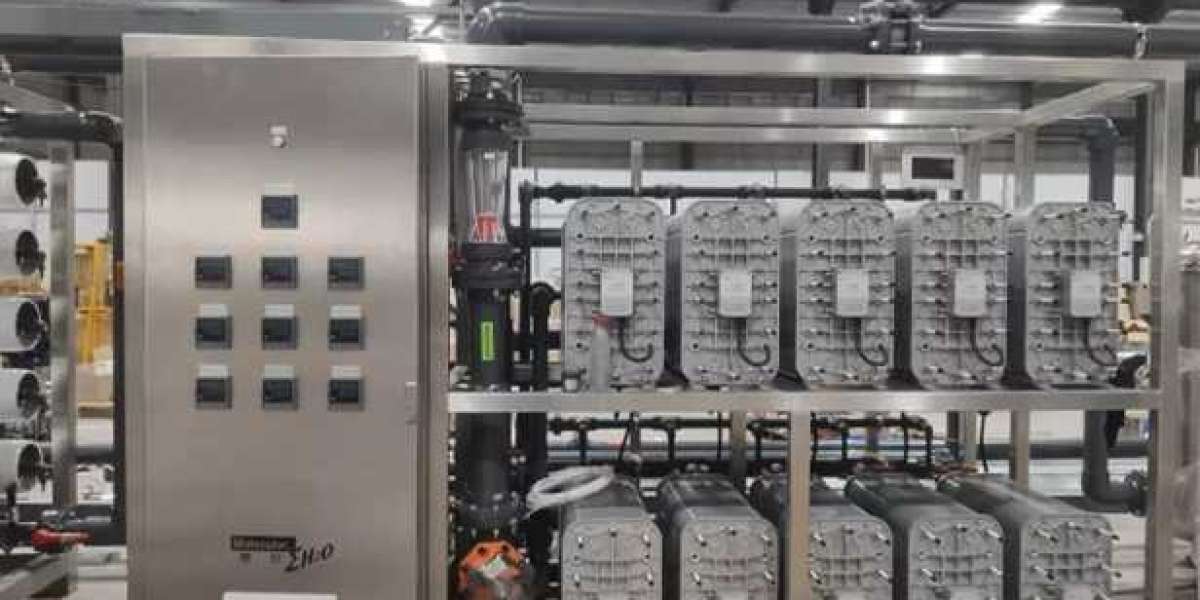

For power generation facilities, water is the lifeblood of the steam cycle. High-pressure boilers and steam turbines require water of exceptional purity to prevent the formation of scale and the onset of corrosion. Silica, in particular, must be reduced to parts-per-billion levels to prevent deposits on turbine blades. The EDI water treatment system has become a cornerstone of modern power plant chemistry, providing the reliable, low-silica water necessary for safe and efficient operation.
The continuous nature of the EDI water treatment system is perfectly suited for the 24/7 demands of a power plant. Unlike conventional ion exchange, which requires redundant trains to allow for regeneration time, an EDI system provides a steady stream of demineralized water without interruption. This reduces the complexity of the water steam cycle and minimizes the risk of "breakthrough"—the sudden release of ions that can occur when a resin bed becomes exhausted.
Molewater’s EDI solutions for the energy sector are built for durability. They are often used as a "polishing" stage following a double-pass RO system. This configuration ensures that the feed water entering the EDI module is already of high quality, allowing the EDI to reach its maximum potential resistivity of 18.2 MΩ·cm. By maintaining such high purity, power plants can reduce the frequency of boiler blowdowns, saving both water and energy. In an industry where uptime is everything, the EDI water treatment system provides the reliable backbone for efficient power generation.