In the professional world, credibility is not claimed—it is proven. The work experience certificate stands as one of the most reliable proofs of your career journey, quietly validating your role, tenure, and contributions.
While resumes speak in your voice, this document speaks on behalf of your employer. That distinction makes it remarkably powerful in today’s verification-driven hiring landscape.
What is a Work Experience Certificate?
A work experience certificate is an official document issued by an organization to confirm an employee’s tenure, role, and performance. It is typically provided when an employee resigns or completes their employment.
More than just a formality, it acts as a career validation tool, helping future employers verify the authenticity of your professional background.
Why is a Work Experience Certificate Important?
The importance of a work experience certificate extends far beyond documentation. It plays a critical role in shaping hiring decisions.
- It serves as official proof of employment
- It validates the claims made in your resume
- It strengthens your professional credibility
- It helps avoid being classified as a fresher
Without this document, even experienced professionals may face unnecessary hurdles. In a competitive job market, that’s a risk worth avoiding.
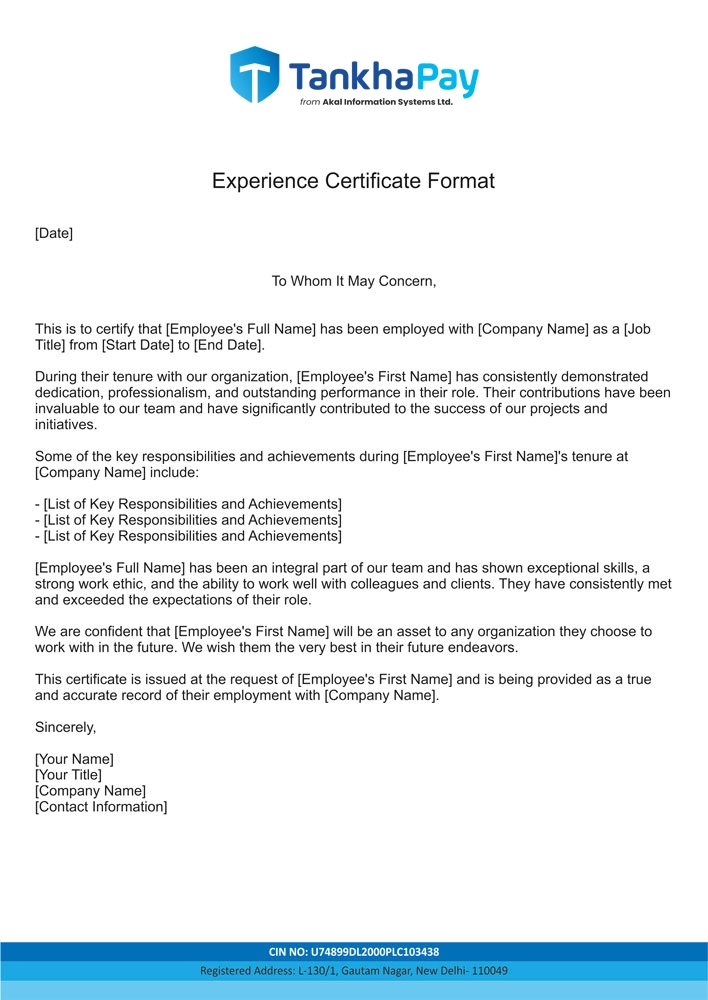
Standard Work Experience Certificate Format
A well-structured format ensures clarity, professionalism, and acceptance across organizations. Below is a simplified format widely used:
[Company Letterhead]
[Date of Issuance]
To Whom It May Concern,
This is to certify that [Employee Name] was employed with [Company Name] as a [Designation] from [Joining Date] to [Last Working Date].
During their tenure, they were responsible for [key roles and responsibilities] and consistently demonstrated professionalism, dedication, and strong performance.
We appreciate their contributions and wish them success in their future endeavours.
Sincerely,
[Authorized Signatory]
[Designation]
[Company Seal]
This format, when executed properly, ensures the document is both clear and authoritative.
Key Elements You Should Never Miss
Even a minor omission can reduce the effectiveness of your certificate. Make sure it includes:
- Employee’s full name
- Job title/designation
- Employment duration (DOJ Last Working Day)
- Roles and responsibilities
- Performance or conduct remarks
- Official signature and company seal
Each element contributes to making the certificate credible and complete.
Best Practices for Writing a Strong Certificate
A work experience certificate should be concise yet impactful. The language used plays a crucial role.
- Use clear and professional wording
- Highlight measurable contributions where possible
- Maintain a positive and appreciative tone
- Avoid vague or generic descriptions
For instance, instead of writing “Handled tasks,” a stronger version would be “Efficiently managed operational tasks, improving team productivity.”
This subtle shift makes the document far more persuasive.
Industry-Wise Variations
While the format remains consistent, the content varies depending on the role:
- Teachers – Focus on teaching methods and student engagement
- Accountants – Highlight financial accuracy and compliance
- Sales Executives – Emphasize targets, revenue, and client relationships
- Data Analysts – Showcase insights, tools, and data-driven impact
This flexibility allows the work experience certificate to reflect role-specific expertise effectively.
Work Experience Certificate vs Other Documents
Understanding how this document differs from others is essential:
- Experience Letter – More detailed and narrative in style
- Relieving Letter – Confirms resignation and clearance
The work experience certificate, however, remains the most formal and structured proof of employment.
How to Request a Work Experience Certificate
If you haven’t received your certificate, requesting it professionally is crucial.
- Contact your HR department or reporting manager
- Clearly mention your employment details
- Specify any required information (DOJ, DOE, designation)
- Maintain a polite and formal tone
A well-written request ensures quicker processing and accurate documentation.
Common Mistakes to Avoid
Even small errors can reduce the credibility of your certificate:
- Missing employment dates
- Incorrect designation
- Lack of signature or company seal
- Vague or unclear responsibilities
Avoiding these mistakes ensures your document remains reliable and impactful.
Final Takeaway
The work experience certificate may appear to be a simple document, but its impact on your career is substantial. It validates your journey, strengthens your profile, and builds trust with future employers.
In a hiring landscape where verification matters more than ever, having a well-structured and professionally written certificate is not optional—it is essential.