
In the oil and gas industry, after oil and gas are extracted from underground reservoirs, they undergo a complex process of "decentralized collection - preliminary processing - safe transportation"—that is, oil and gas production and gathering. This process encompasses multiple stages, including oil and gas separation, crude oil dehydration, metering, and light hydrocarbon recovery, involving various above-ground and underground equipment. Furthermore, it is affected by multiple factors such as reservoir characteristics and environmental conditions; deviations in any stage can lead to decreased efficiency, increased costs, or even safety risks. The emergence of oil and gas production and gathering simulators provides the industry with a fully visualized and optimizable solution, becoming a key support for training, practical application, solution design, and project evaluation.
Oil and gas production and gathering simulators are specialized simulation systems integrating software and hardware. Their core function is to reproduce the entire lifecycle of oil and gas from reservoir extraction to end-users through computer modeling technology. They can accurately replicate core elements such as reservoir geological characteristics, well productivity, and fluid properties, and can also simulate the operational status of various equipment and transportation facilities such as separators, compressors, pipelines, and tankers. Whether assessing the feasibility of different production strategies, estimating oil and gas reserves and production, optimizing well spacing and transportation route design, or conducting hands-on training for personnel, this tool provides a scientific basis and a safe environment, without incurring the equipment wear and safety risks of real-world scenarios.
From a logical perspective, the operation of the oil and gas production and gathering/transportation simulator follows a rigorous closed-loop process: First, a realistic reservoir model is constructed, and geological data such as porosity and permeability are input; then, well configuration parameters are set, including well spacing, completion design, and production rate, simulating the flow patterns of oil, gas, and water between the reservoir and wells; next, surface processing facilities and transportation networks are integrated, recreating the entire chain of oil and gas separation, pressurized transportation, and long-distance transportation; finally, advanced mathematical algorithms are used to optimize the system, selecting the production and transportation scheme that maximizes economic benefits, while also supporting sensitivity analysis to test the impact of different parameter changes on the overall system and proactively identify potential problems.
In practical applications within the oil and gas industry, the value of this type of simulator is reflected in multiple dimensions. For businesses, it effectively reduces operating costs—eliminating the need to lease expensive real equipment to conduct multi-scenario testing and large-scale personnel training; simultaneously optimizing production efficiency by accurately modeling to find the optimal production rate and transportation routes, thus improving resource utilization. For operators, the simulator provides a "zero-risk hands-on" environment, allowing for repeated practice in highly realistic virtual scenarios to accumulate experience and avoid errors in real-world operations, whether for basic skills training or emergency response drills. Furthermore, it provides data support for project decision-making, helping businesses mitigate investment risks by simulating the economic feasibility of different solutions.
The current market for oil and gas production and gathering simulators has formed a targeted product matrix. Taking Esimtech's solutions as an example, three core products cover different needs in each stage:
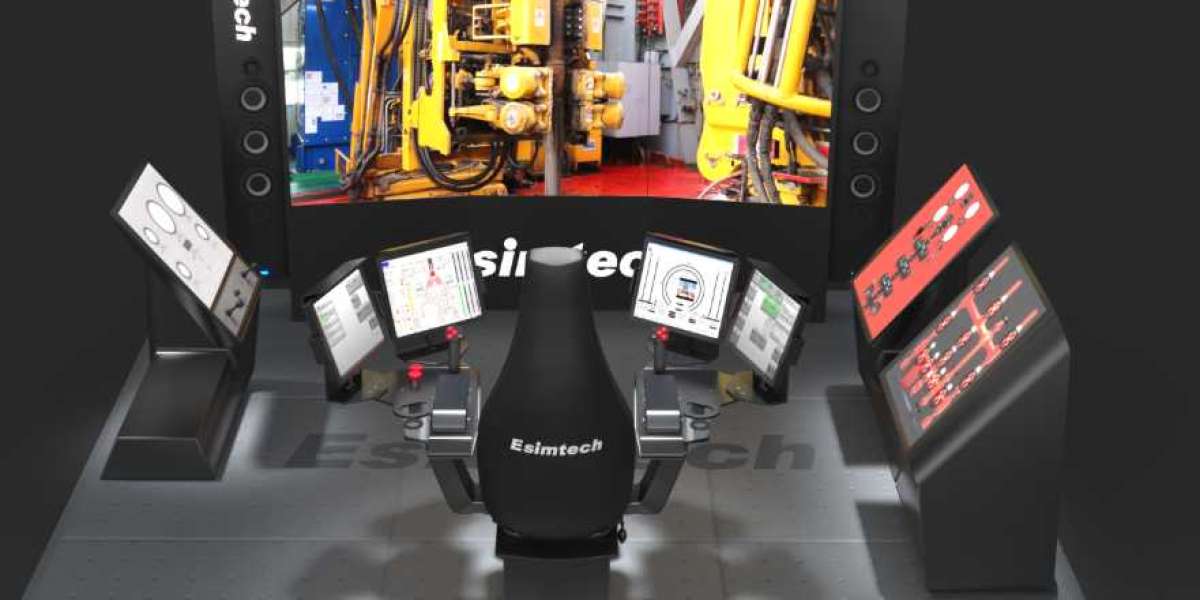
- ESIM-FGS2 Oil and Gas Gathering Simulator: Focuses on simulating the entire process of "gathering - processing - transportation," perfectly reproducing key stages such as oil and gas separation, dehydration, metering, and long-distance transportation. The hardware's control console, operating interface, and parameter display are consistent with real equipment, meeting stringent industry standards.
- ESIM-FGR3 Gas Production Simulator: Specifically designed for natural gas production scenarios, accurately matching the technical requirements of natural gas extraction, processing, and transportation, providing professional simulation support for the natural gas industry.
- ESIM-FOR3 Oil Production Simulator: Focuses on the crude oil extraction stage, simulating oil well production dynamics and optimizing crude oil extraction efficiency, helping to improve the stability and economy of the oil production process.
High-quality oil and gas production and gathering simulators generally possess three core advantages: First, high scene fidelity, robust and durable hardware, and seamless integration of software functions with real production processes; second, high simulation accuracy, based on industry standards and professional algorithms, ensuring a high degree of consistency between data feedback and actual operating conditions; and third, broad application flexibility, meeting the needs of new employee training and skills enhancement for experienced employees, as well as adapting to the design and optimization of solutions for oil and gas projects of different scales.
As the energy industry continues to demand higher efficiency and safety, the application scenarios for oil and gas production and gathering simulators will continue to expand. Whether it's production optimization in small and medium-sized oil and gas fields or solution evaluation for large-scale multinational oil and gas transportation projects, it plays an irreplaceable role. Choosing a simulation system that suits your needs is not only a pragmatic choice to enhance your company's core competitiveness but also an important guarantee for promoting the sustainable development of the industry. For more product details and application cases, please refer to the technical solutions and practical results of professional manufacturers.